
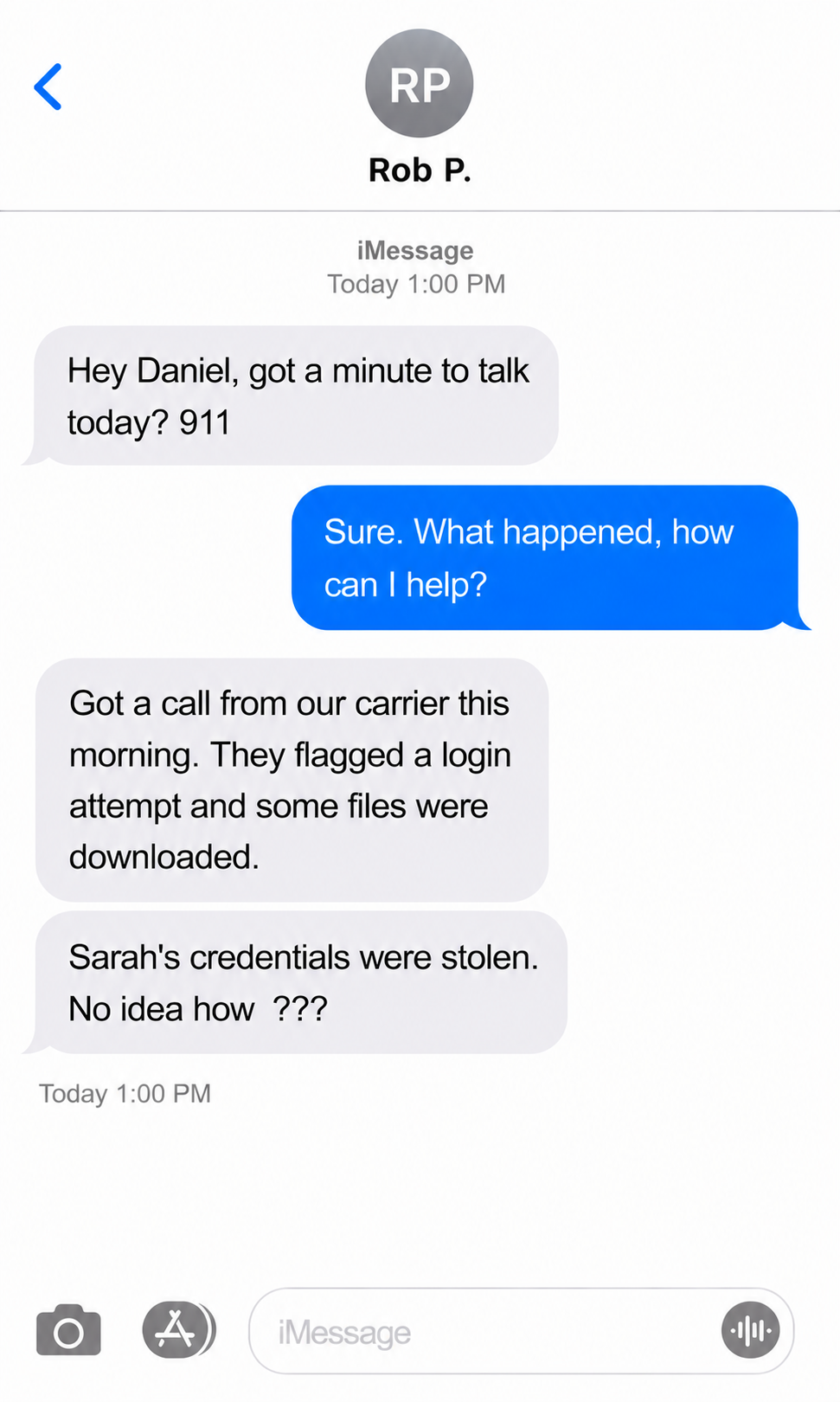
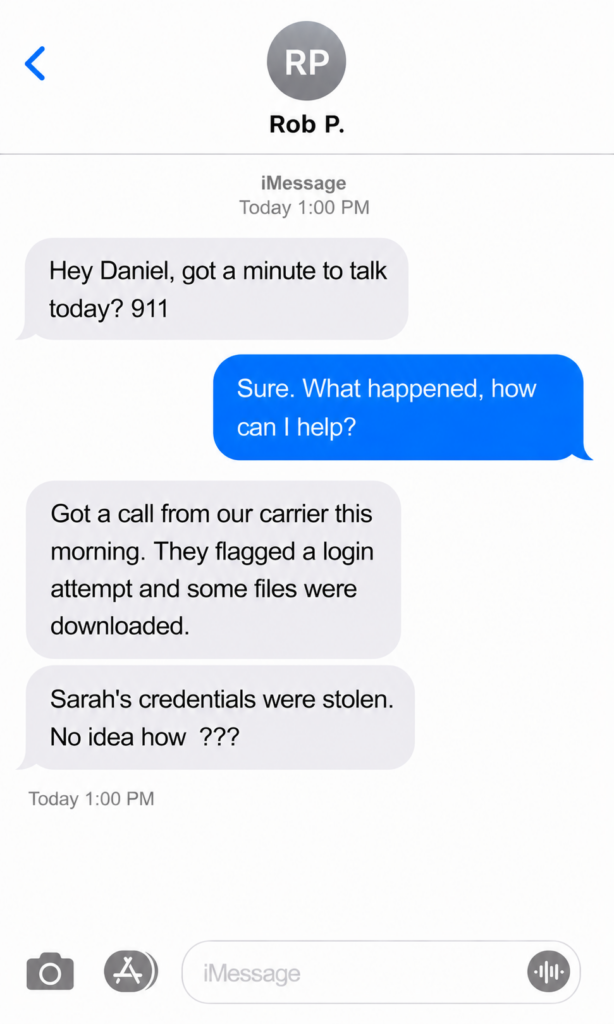
Assuming you are too small to be hit by a cyber attack is putting you at risk. Cyber attacks on small insurance agencies are not the exception attackers make — they are the business model.
I have seen it before: people who thought they were never going to be targeted got hit, and after that started to look for cybersecurity solutions to recover from the attack.
Everything they had been told reinforced that belief. If you look for cyber attacks, you will find thousands of articles talking about Microsoft, Claude, Salesforce integrations, and IT firms. But not agencies.
That belief is what attackers are counting on.
Organized cybercriminal groups do not pick targets based on prestige. They pick based on access and return. A large company requires months and a sophisticated team to breach.
A small insurance agency can be compromised in an afternoon using credential theft, a phishing email, or a phone call that never triggers a single security alert.
One hundred small agencies attacked efficiently will always outperform one large corporation attacked at great cost and effort.
You are not outside of that calculation. You are the center of it.
Think about what a single client file contains:
Every piece of information a criminal needs to steal an identity, drain an account, or file a false return in your client’s name.
You did not set out to become a custodian of some of the most sensitive personal data in your clients’ lives. Yet the moment you write a policy, that’s exactly what you become.
Every piece of client data entrusted to you carries a responsibility that extends far beyond selling insurance. Whether anyone emphasized it during your licensing process or not, protecting that information is now part of your role. The license grants the privilege to serve clients. The responsibility to safeguard their data comes with it.
The financial number makes headlines: $149K is the average cost of a breach to an SMB in the US. We hear less about the operational reality, which is an average of 22 days of downtime for a ransomware attack.
The client calls. The state notification requirements. The E&O conversation. The period of not knowing exactly how far the exposure went.
Agents who experience a breach describe the same thing: they had no idea how much was in their system until they were forced to go through every piece of it.
We are living in a new reality where AI helps these attacks reach more businesses in less time and cause more damage than ever before. You can get hit because of your carrier, a tool you use to manage your work, and even a client.
You need to be protected.
Before you finish reading and keep working, answer one question honestly: Are you, your team, and your data protected?
If the answer is not an easy “Yes,” stop guessing and find out what cybersecurity controls you are missing.
The first step is to get assessed. Do it for free here.
A Cyber Assessment is a short review of your agency’s current security controls that shows exactly where you are exposed before an attacker finds it first. It is the first step every small insurance agency should take toward protection.